Traducir al español y haga que sea mas fácil de entender. Mantenga la estructura. Mantenga etiquetas HTML
Cleretum herrei is an annual plant first described by Martin Heinrich Gustav Schwantes in 1950 as Micropterum herrei. Its current name was given by Hans-Dieter Ihlenfeldt and Michael Struck in 1986.
Scientific Name
Cleretum herrei (Schwantes) Ihlenf. & Struck
Common Name(s)
Weedy Sandfig
Synonym(s)
Aethephyllum herrei, Micropterum herrei
Scientific Classification
Family: Aizoaceae
Subfamily: Ruschioideae
Tribe: Dorotheantheae
Genus: Cleretum
Etymology
The specific epithet «herrei (HER-ray-eye)» honors Hans Herre (1895-1979), a botanist well known for collecting succulents in the Namaqualand and Richtersveld areas of South Africa as well as Namibia.
Origin
Cleretum herrei is native to South Africa. It occurs at lower slopes only on the Cape Peninsula.
Description
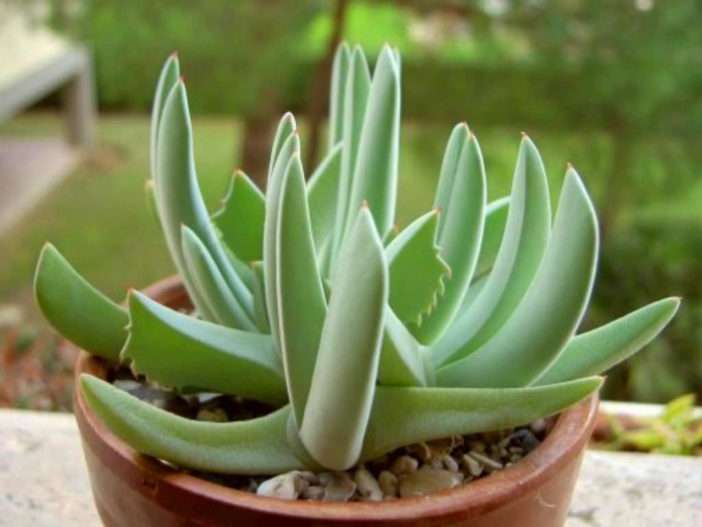
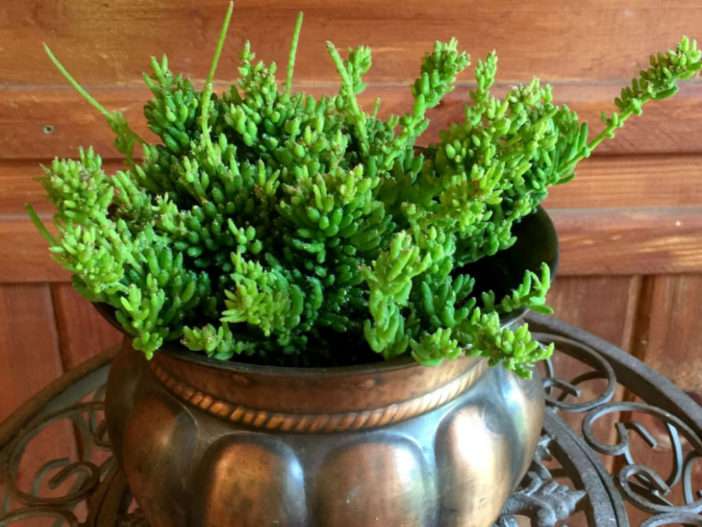
Cleretum herrei is an annual succulent with prostrate branches and opposite green leaves covered with glistening water cells. The leaves are either lyre-shaped or pinnately divided and often have red margins.
During the spring, Cleretum herrei produces small flowers with white petals, often with pinkish tips, and a flat-topped ovary. The fruits are five-locular capsules with large valve wings.

How to Grow and Care for Cleretum herrei
Light: Cleretum herrei needs bright light but not too much direct sunlight. A windowsill that receives 4 to 5 hours of direct sunlight in the morning and partial shade in the afternoon is ideal for indoor growing.
Soil: This plant thrives in porous soil, allowing the water to drain away quickly. Therefore, use commercial soil for succulents or make your own well-draining mix.
Temperature: High temperatures are not a problem as long as there is plenty of fresh air, but this plant cannot withstand cold temperatures.
Watering: Water Cleretum herrei thoroughly, but allow the soil to dry between waterings.
Fertilizing: This plant does not require frequent fertilization but can benefit from a balanced fertilizer.
Propagation: Cleretum herrei is started from seeds sown in the fall. The seeds can be sown in a cold frame.
Learn more at How to Grow and Care for Mesembs.
Toxicity of Cleretum herrei
Cleretum herrei is considered non-toxic, so having it around kids and pets is safe.
Links
- Back to genus Cleretum
- Succupedia: Browse succulents by Scientific Name, Common Name, Genus, Family, USDA Hardiness Zone, Origin, or cacti by Genus
Photo Gallery
Click on a photo to see a larger version.